
Three Card Poker explained (the Q-6-4 rule and why Pair Plus is a completely separate bet)
Last updated: 2026-07-30 · Written by Priya Nair
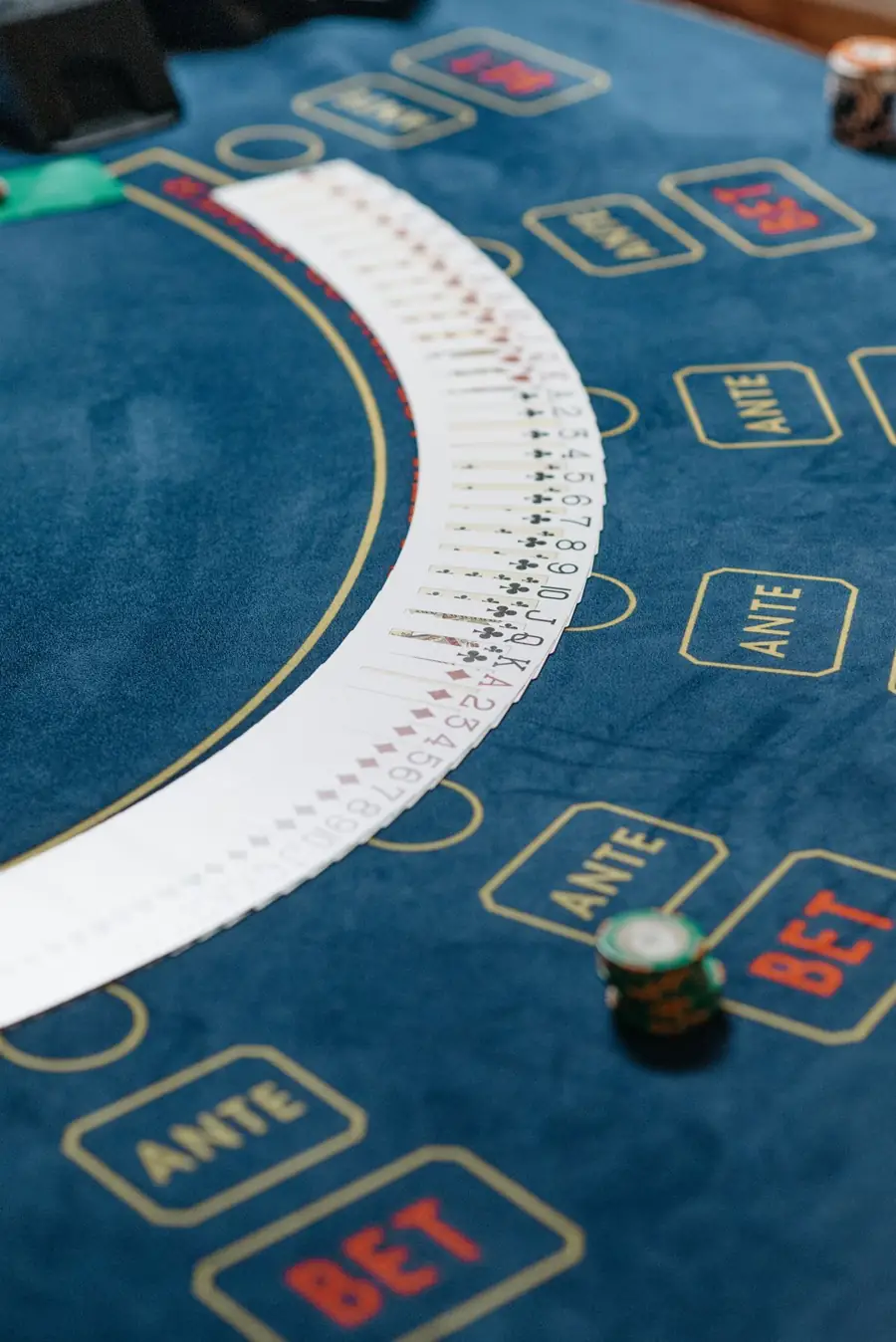
Three Card Poker is one of the most common table games in any US casino specifically because it's fast, easy to learn, and settles in one round of three cards each — the player isn't competing against other players, just against the dealer's hand. Two things trip up new players immediately: there's a single, memorizable rule that minimizes the house edge on the main bet, and the popular Pair Plus side bet is a completely separate wager that has nothing to do with beating the dealer.
The Ante and Play bet: how the main hand works
A round starts with an equal Ante wager, after which both the player and dealer receive three cards. The player looks at their hand and decides whether to make a Play bet equal to the Ante, or fold and forfeit the Ante entirely. The dealer's hand must qualify with Queen-high or better to compete; if the dealer doesn't qualify, the Ante pays even money automatically and the Play bet pushes regardless of what the player was holding. If the dealer does qualify, both the Ante and Play bets are compared against the dealer's hand and settle based on standard poker hand rankings adapted for three cards (straight beats a flush in this variant, since a straight is rarer with only three cards).
The Q-6-4 rule: the entire strategy in one line
Optimal strategy for the Ante/Play decision comes down to a single threshold known as the Q-6-4 rule: make the Play bet with Queen-6-4 or better, and fold everything weaker. Concretely, that means folding unless the highest card is at least a Queen, with the second-highest at least a 6 when the top card is exactly a Queen. Following this rule precisely brings the house edge on the Ante/Play combination down to roughly 3.37%, and any deviation — folding a hand that qualifies, or playing a hand that doesn't — pushes the edge against the player higher than necessary.
Pair Plus: a separate bet with zero strategic decisions
Pair Plus is an optional side bet, placed before cards are dealt, that pays based purely on the strength of the player's own three-card hand regardless of what the dealer holds or whether the player even makes the Play bet — a pair or better wins, on a payout table that scales up sharply for straights, three of a kinds, and straight flushes. Because Pair Plus settles entirely on the player's own cards with no decision point once the bet is placed, there's no strategy to apply to it at all, unlike the Ante/Play decision — it's a pure fixed-odds side wager, similar in spirit to how Let It Ride explained separates its own no-decision bonus bets from the hand-strength decisions in the main game.
Why the exact payout table changes the house edge more than the rules do
Three Card Poker's core rules are essentially fixed across casinos, but the specific Ante Bonus payout table for premium hands (straight, three of a kind, straight flush) can vary meaningfully and directly changes the house edge on that portion of the game — a 5-4-1 Ante Bonus payout table carries roughly a 3.4% house edge, while a weaker 4-3-1 table pushes that same portion of the game to around 6.8%, essentially doubling the house's advantage on identical underlying rules. Checking the specific Ante Bonus paytable at a table before playing is the single most useful piece of information for judging whether that particular table is worth sitting down at.
FAQ
- What is the Q-6-4 rule in Three Card Poker? It's the single threshold for optimal Ante/Play strategy: make the Play bet with Queen-6-4 or better, and fold everything weaker. Following it precisely brings the house edge on the Ante/Play combination down to roughly 3.37%.
- Does the Pair Plus bet require any strategy? No. Pair Plus is placed before cards are dealt and pays entirely based on the strength of the player's own three-card hand, with no decision point afterward — there's nothing to strategize once the cards are in hand.
- Why does the same game of Three Card Poker have different house edges at different casinos? The core rules are fixed, but the specific Ante Bonus payout table for premium hands varies by casino. A 5-4-1 payout table carries roughly a 3.4% house edge on that portion of the game, while a weaker 4-3-1 table pushes it to around 6.8%.
Related guides