
Video poker strategy explained (Jacks or Better, and why the pay table matters more than the play)
Last updated: 2026-07-29 · Written by Elena Kovač
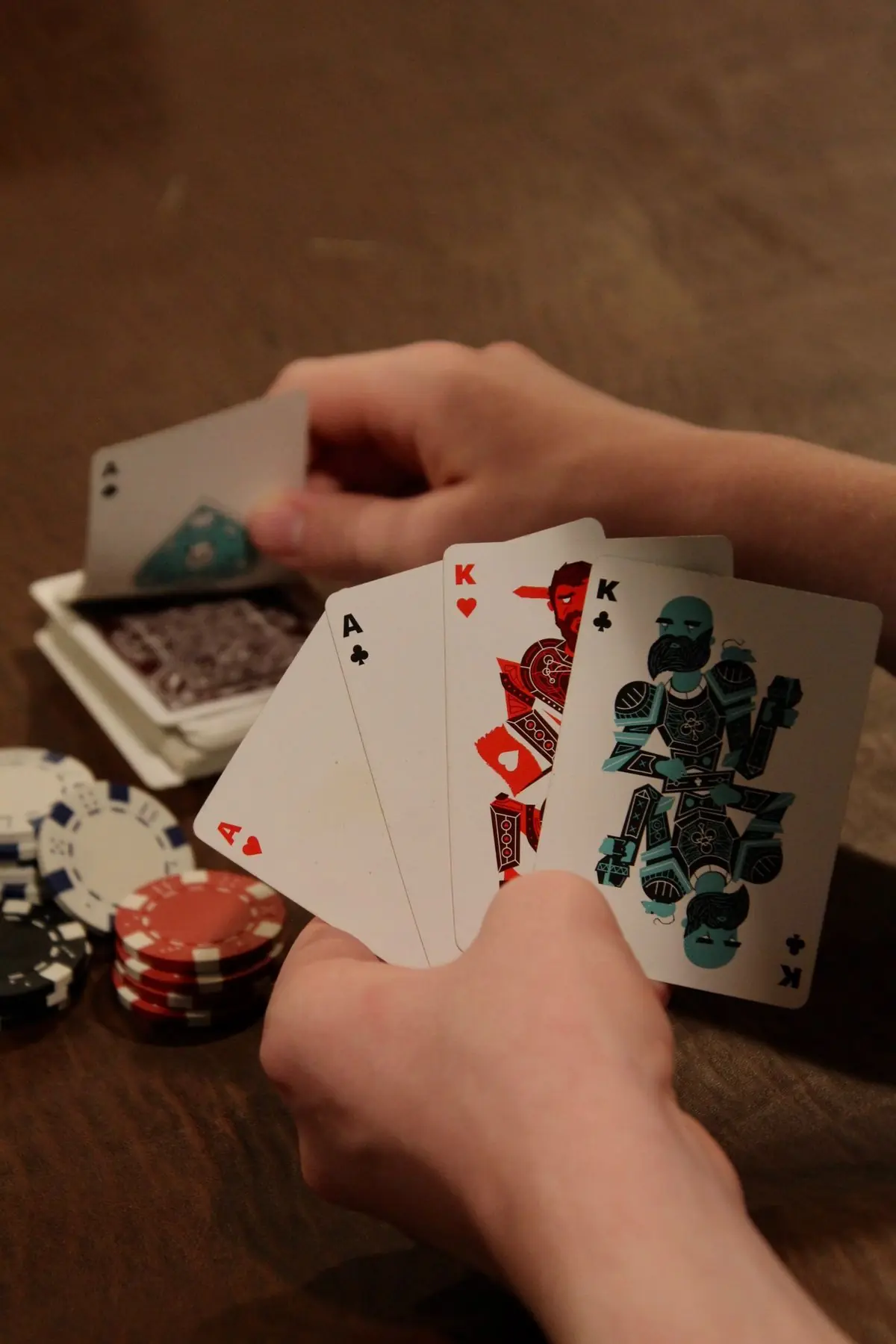
Jacks or Better deals five cards, lets you discard and redraw any of them once, and pays out based on the final hand — a pair of jacks or better is the minimum winning hand, which is where the name comes from. Unlike slots, the return isn't fixed by the machine's programming alone: it depends on both the specific pay table posted on the machine's glass and whether every hold decision matches the mathematically optimal play, which is a fixed, learnable order rather than a feel-based judgment call.
Why the pay table matters before any strategy does
Jacks or Better machines are commonly labeled by their full house and flush payouts — a "9/6" machine pays 9x the bet for a full house and 6x for a flush, while an "8/5" machine pays only 8x and 5x for the exact same hands. That difference alone moves the game's return with perfect play from 99.54% on a full-pay 9/6 machine down to 97.30% on an 8/5 machine — a gap of roughly $22 per $1,000 played, on two machines that can look identical from the front. Checking the actual pay table before sitting down matters more than any single hold decision made during play.
The hold priority order, from strongest to weakest
Correct Jacks or Better strategy follows a fixed ranking rather than instinct: hold a pat royal flush, straight flush, or four of a kind outright; four cards to a royal flush are strong enough to break up an already-made straight or flush to chase them; a pat full house, flush, straight, or three of a kind gets held as dealt; two pair is always held complete and never split to chase a full house; and a high pair (jacks through aces) gets held with the other three cards discarded. Below a high pair, the order continues with three cards to a royal flush, four cards to a flush, a low pair, four cards to an open-ended straight, then suited and unsuited high cards, roughly in that order.
A concrete hold decision, worked through
Dealt the jack of hearts, jack of clubs, 9 of hearts, 5 of hearts, and 2 of hearts, a player has both a high pair (the jacks) and four cards toward a flush (the four hearts). The correct play is to hold the pair of jacks and discard the three hearts — the guaranteed value of the pair plus its potential to improve to three or four of a kind outweighs the flush draw, even though the flush draw might look more exciting. This is the kind of decision the fixed strategy order exists to settle: value that's already locked in beats a draw that only sometimes completes.
Why draw type matters more than it looks like it should
Four cards toward a flush beat four cards toward an open straight, which beat four cards toward an inside straight, because the number of cards that complete each draw is different: a flush draw has nine remaining cards of the right suit, an open-ended straight draw has eight cards that complete it from either end, and an inside straight draw has only four cards that fill the specific gap needed. A common mistake is treating all four-card draws as roughly equivalent, or holding a low pair over a stronger drawing hand out of habit — the correct choice depends on exactly which draw type is in hand, not a general sense that "four cards toward something" is always worth chasing.
FAQ
- What's the difference between a 9/6 and 8/5 Jacks or Better machine? The numbers refer to the full house and flush payout multipliers. A 9/6 machine pays 9x the bet for a full house and 6x for a flush and returns 99.54% with perfect play; an 8/5 machine pays only 8x and 5x for those same hands and returns just 97.30% — a large gap between two machines that can look visually identical.
- What's the correct hold priority in Jacks or Better? From strongest to weakest: a pat royal flush, straight flush, or four of a kind; four cards to a royal flush; a pat full house, flush, straight, or three of a kind; two pair (held complete); a high pair (jacks or better); then three cards to a royal flush, four cards to a flush, a low pair, and four cards to an open straight, roughly in that order.
- Is a flush draw better than a straight draw in video poker? Yes, generally. A four-card flush draw has nine cards left that complete it, an open-ended straight draw has eight, and an inside straight draw has only four — the more cards that complete a draw, the stronger it is, which is why flush draws typically outrank straight draws of the same card count.
Related guides
- Blackjack basic strategy explained
- House edge explained
- Game contribution and rtp explained
- Card counting hi lo system explained